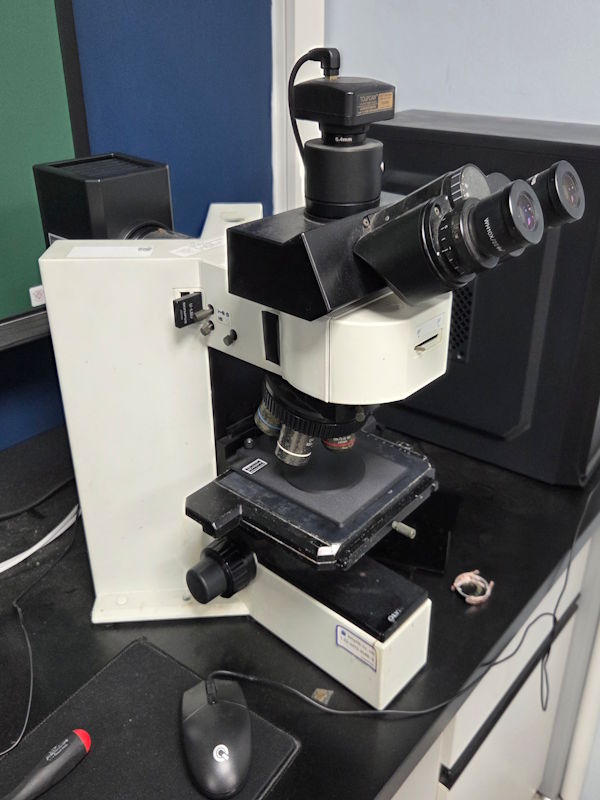
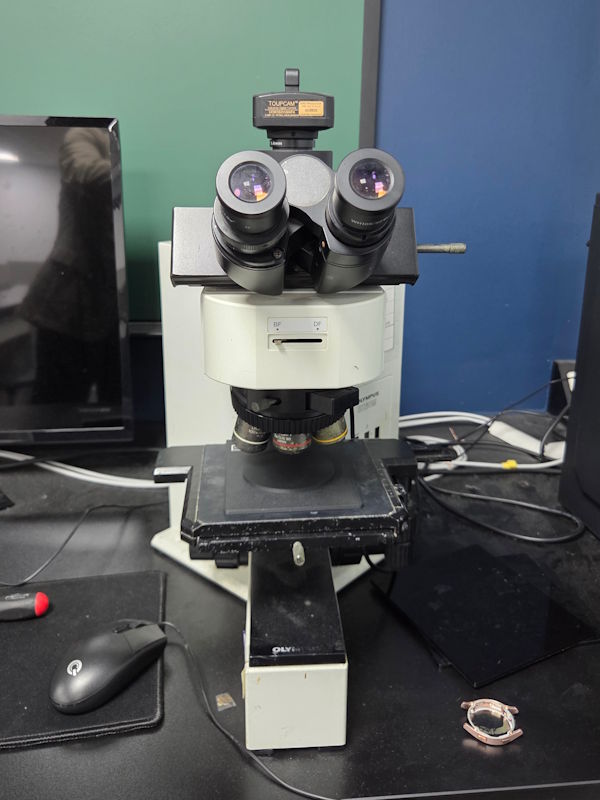
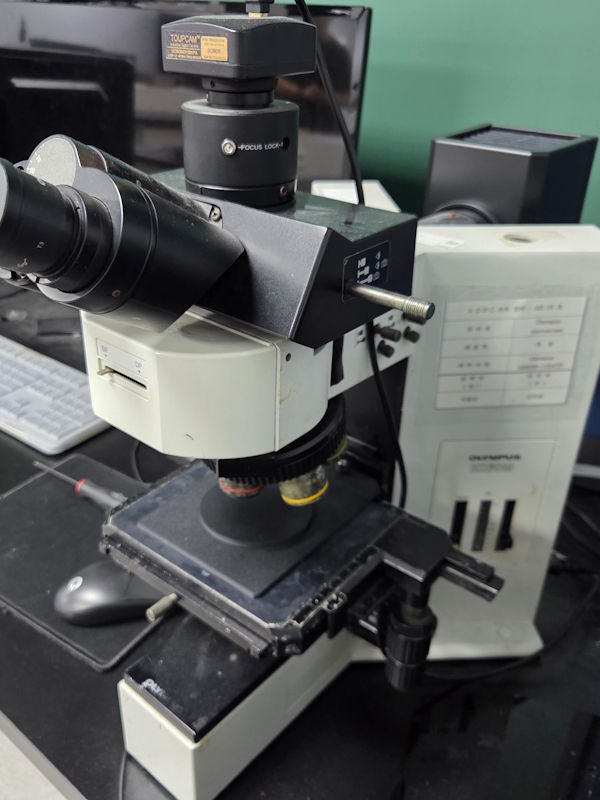
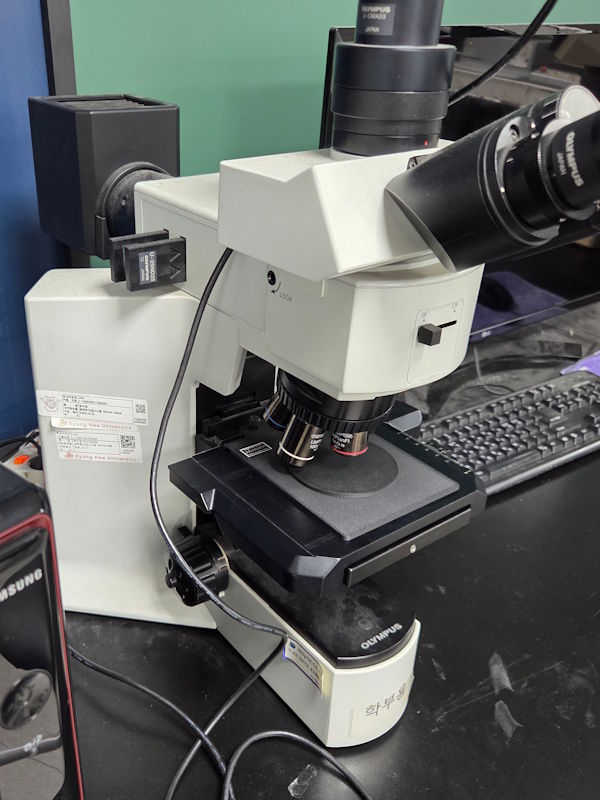
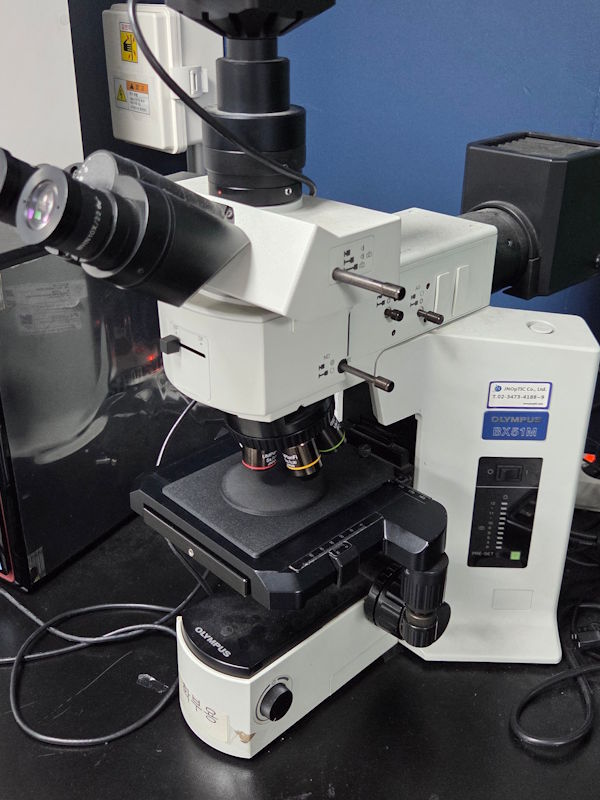
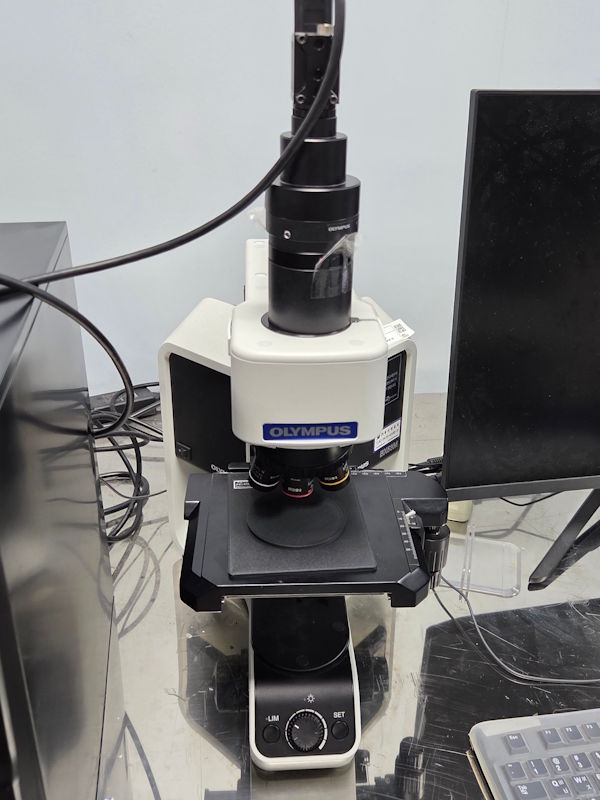
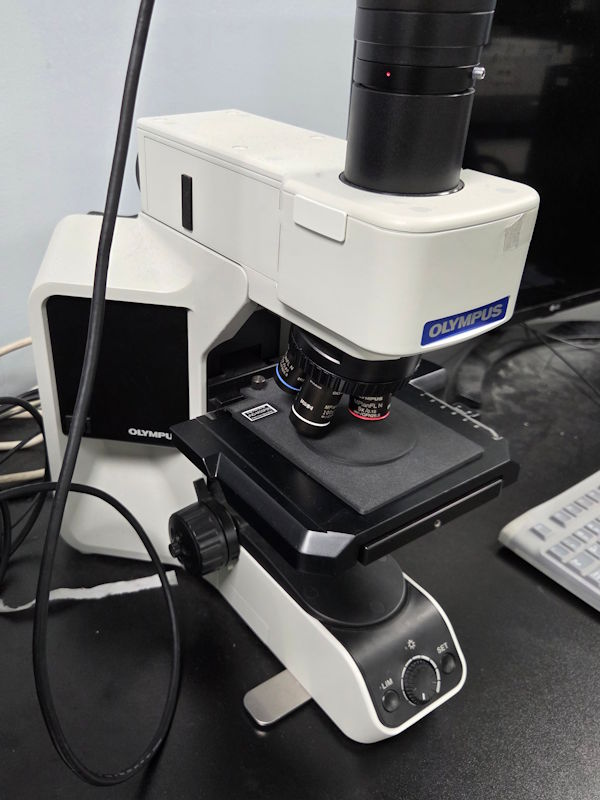
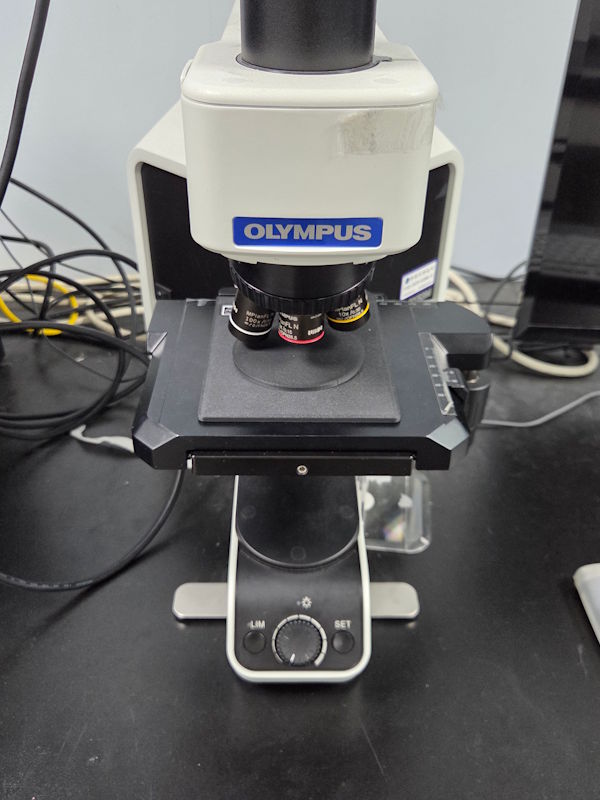
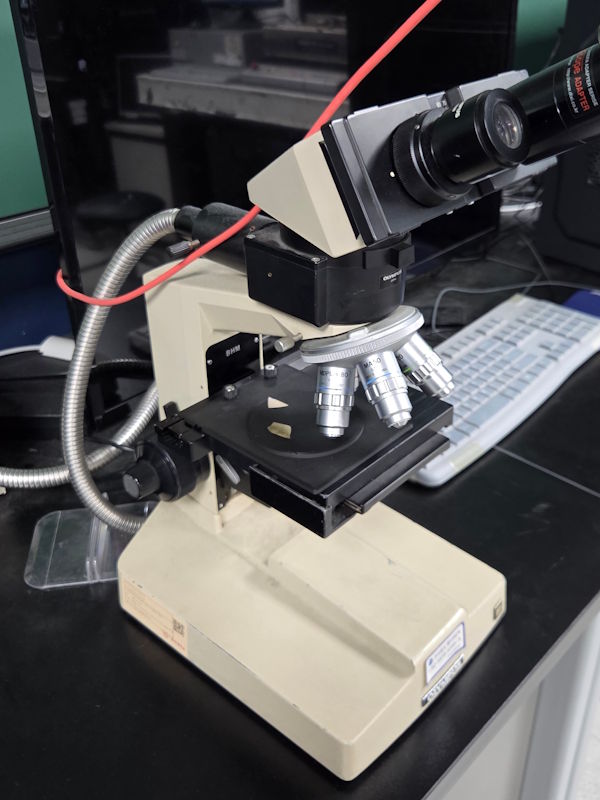
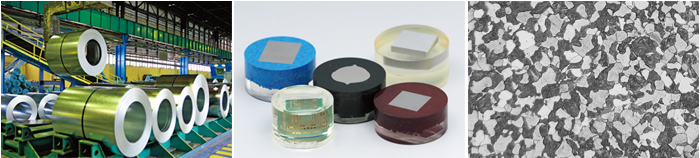
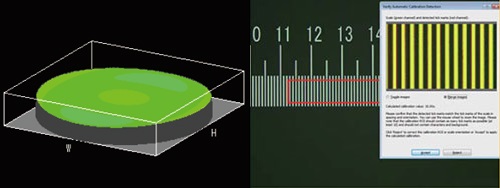
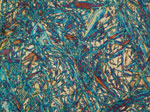
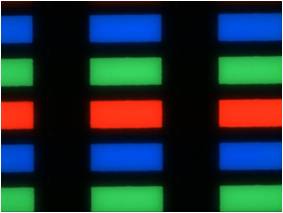
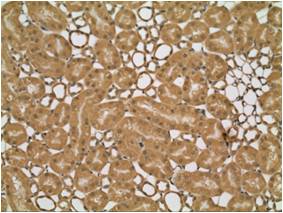
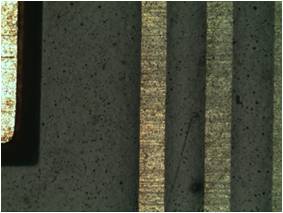
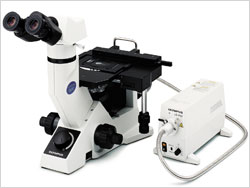
Designed for use in the steel, automotive, electronics, and other manufacturing industries, the GX53 microscope delivers crisp images that can be difficult to capture using conventional microscopy observation methods. When combined with OLYMPUS Stream image analysis software, the microscope streamlines the inspection process from observation to image analysis and reporting.
Fast Inspections, Advanced Functionality
Quickly observe, measure, and analyze metallurgical structures.
Advanced Analysis Tools
1. Combined observation methods produce exceptional images
2. Easily create panoramic images
3. Create all-in-focus images
4. Capture both bright and dark areas
Optimized for Material Science
1. Software designed for materials science
2. Metallurgical analysis that complies with industrial standards
Userfriendly
Even novice operators can comfortably make observations, analyze results, and create reports.
1. Easily restore microscope settings
2. User guidance helps simplify advanced analysis
3. Efficient report generation
Advanced Imaging Technology
Our proven optics and imaging technology deliver clear images and reliable results.
1. Reliable optical performance: wavefront aberration control
2. Clear images: image shading correction
3. Consistent color temperature: high-intensity white LED illumination
4. Precise measurements: auto calibration
Modular
Choose the components you need for your application.
1. Build your system your way: fully customizable system with a variety of optional components
The MX63 and MX63L microscope systems are optimized for high-quality inspections of wafers as large as 300 mm, flat panel displays, circuit boards, and other large samples. Their modular design enables you to choose the components you need to tailor the system to your application.
These ergonomic and user-friendly microscopes help increase throughput while keeping inspectors comfortable while they do their work. Combined with OLYMPUS Stream image analysis software, your entire workflow, from observation to report creation, can be simplified.
Functional
Leading-Edge Analysis Tools
The MX63 series’ versatile observation capabilities provide clear, sharp images so users can reliably detect defects in their samples. New illumination techniques and image acquisition options within OLYMPUS Stream image analysis software give users more choices for evaluating their samples and documenting their findings.
The Invisible Becomes Visible: MIX Observation and acquisition
MIX observation technology produces unique observation images by combining darkfield with another observation method, such as brightfield, fluorescence, or polarization. MIX observation enables users to view defects that are difficult to see with conventional microscopes. The circular LED illuminator used for darkfield observation has a directional darkfield function where only one quadrant is illuminated at a given time. This reduces a sample’s halation and is useful for visualizing a sample’s surface texture.
Structure on semiconductor wafer
Condenser
Easily Create Panoramic Images: Instant MIA
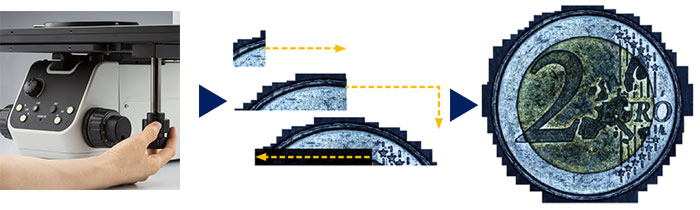
With multiple image alignment (MIA), users can stitch images together quickly and easily simply by moving the KY knobs on the manual stage—a motorized stage is not necessary. OLYMPUS Stream software uses pattern recognition to generate a panoramic image, giving users a wider field of view.
Instant MIA image of a coin
Create all-in-focus images: EFI
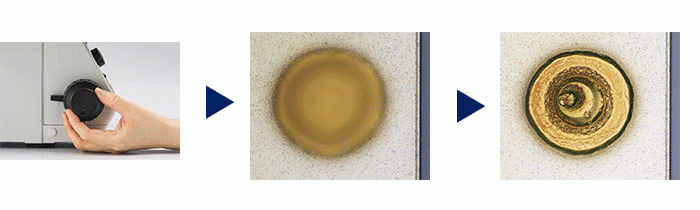
The Extended Focus Imaging (EFI) function within OLYMPUS Stream captures images of samples whose height extends beyond the depth of focus of the objective and stacks them together to create one image that is all in focus. EFI can be executed with either a manual or motorized Z-axis and creates a height map for easy structure visualization. It is also possible to construct an EFI image while offline within Stream Desktop.
Stud bump on an IC chip
Capture Both Bright and Dark Areas Using HDR
Using advanced image processing, high dynamic range (HDR) adjusts for differences in brightness within an image to reduce glare. HDR improves the visual quality of digital images thereby helping to generate professional-looking reports.
From Basic Measurement to Advanced Analysis
Measurement is essential to quality and process control and inspection. With this in mind, even the entry-level OLYMPUS Stream software package includes a full menu of interactive measurement functions, with all measurement results saved with image files for further documentation. In addition, the OLYMPUS Stream Materials Solution offers an intuitive, workflow-oriented interface for complex image analysis. At the click of a button, image analysis tasks can be executed quickly and precisely. With a significant reduction in processing time for repeated tasks, operators can concentrate on the inspection at hand.
Efficient Report Creation
Creating a report can often take longer than capturing the image and taking the measurements. OLYMPUS Stream software provides intuitive report creation to repeatedly produce smart and sophisticated reports based on pre-defined templates. Editing is simple and reports can be exported to Microsoft Word or PowerPoint software. In addition, OLYMPUS Stream software’s reporting function enables digital zooming and magnification on acquired images. Report files are a reasonable size for easier data exchange by email.
Stand-Alone Camera Option
Using a DP22 or DP27 microscope camera, the MX63 series becomes an advanced stand-alone system. The cameras can be controlled via a compact box that requires only minimal space, helping users maximize their laboratory space while still capturing clear images and making basic measurements.
Advanced Designed to Support Cleanroom Conformity
The MX63 series is designed to work in a cleanroom and has features that help minimize the risk of contaminating or damaging samples. The system has an ergonomic design that helps keep users comfortable, even during prolonged use. The MX63 series complies with international specifications and standards, including SEMI S2/S8, CE, and UL.
Optional Wafer Loader Integration ― AL120 System*
An optional wafer loader can be attached to MX63 series to safely transfer both silicon and compound semiconductor wafers from a cassette to the microscope stage without using tweezers or wands. Renowned performance and reliability enable safe, efficient front and back macro inspections while the loader helps improve productivity in the laboratory.
MX63 combined with the AL120 wafer loader (200 mm version)
Fast, Clean Inspections
The MX63 series delivers contamination-free wafer inspections. All motorized components are housed in a shielded structure, and antistatic processing is applied to the microscope frame, tubes, breath shield, and other parts. The rotation speed of the motorized nosepieces is faster and safer than manual nosepieces, decreasing the time between inspections while keeping the operator’s hands below the wafer, reducing potential contamination.
System Design Achieving Efficient Observations
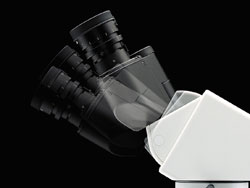
The XY stage is capable of both coarse and fine stage movements thanks to the combination of a built-in clutch and the XY knobs. The stage helps make observations efficient, even for large samples, such as 300 mm wafers. The tilting observation tube’s extensive range enables operators to sit at the microscope in a comfortable posture.
System Design Achieving Efficient Observations
The XY stage is capable of both coarse and fine stage movements thanks to the combination of a built-in clutch and the XY knobs. The stage helps make observations efficient, even for large samples, such as 300 mm wafers. The tilting observation tube’s extensive range enables operators to sit at the microscope in a comfortable posture.
Accepts All Wafer Sizes
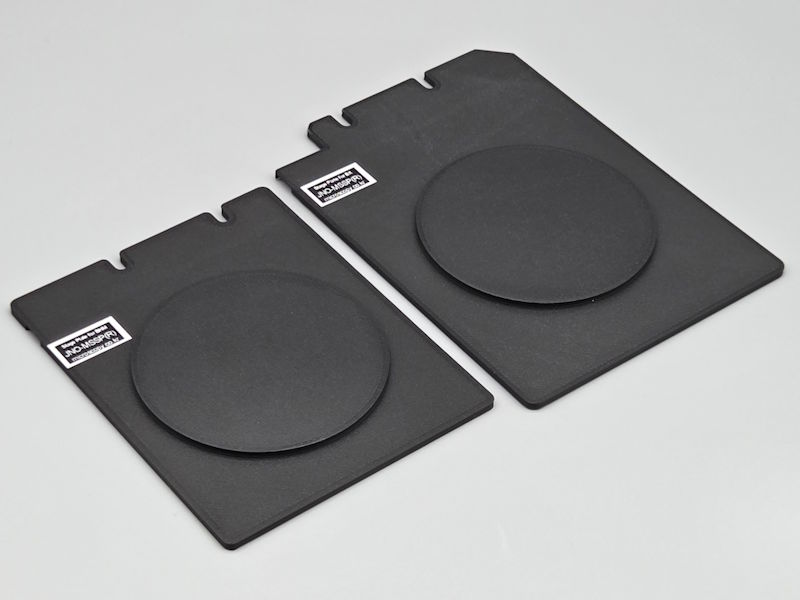
Wafer holders and glass plates
The system works with various types of 150–200 mm and 200–300 mm wafer holders and glass plates. Should the size of the wafters change on the production line, the microscope’s frame can be modified at minimal cost. With the MX63 series, different stages can be used to accommodate 75 mm, 100 mm, 125 mm, and 150 mm wafers on the inspection line.
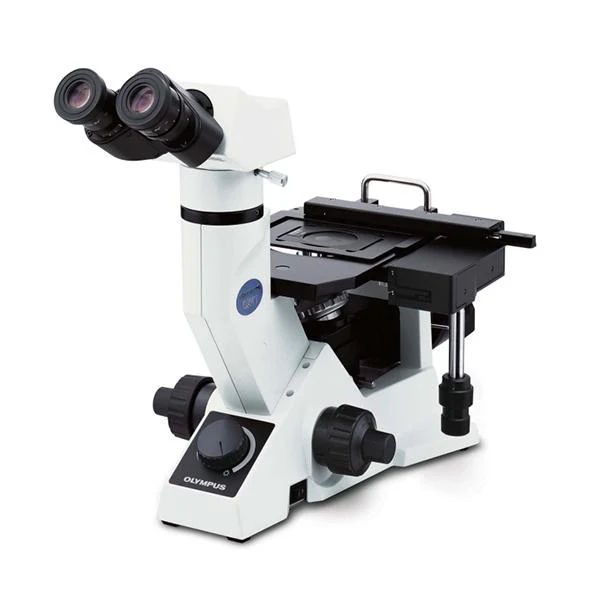
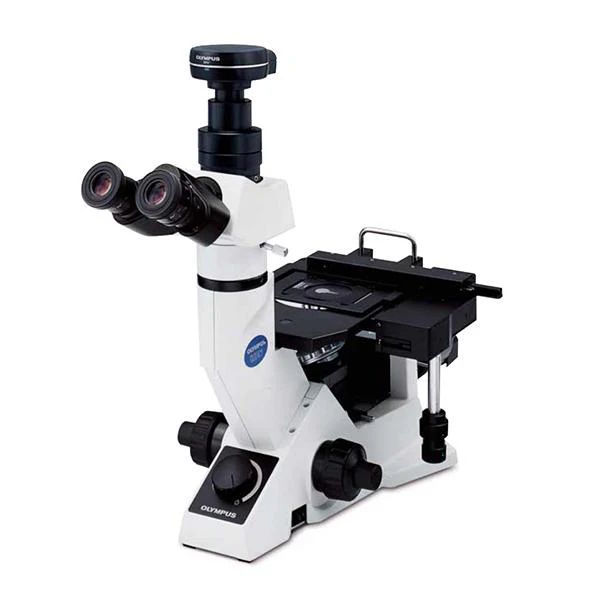
OLYMPUS GX41 도립형 금속 현미경은 컴팩트하고 무게가 가벼운 소형 디자인으로 이동이 편리하며 사용하기가 간편합니다. 손쉽고 빠르게 어디서든 원하시는 장소에서 다양한 금속샘플을 관찰하는데 효율적입니다.
이동성과 인체공학적
명시야와 편광에서의 우수한 분해능과 선명한 이미지
소프트웨어 솔루션
이동성과 인체공학적
모바일 시스템은 어디에서든지 현장 검사를 지원
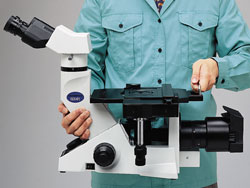
컴팩트한 바디는 공간제약이 있는 장소에도 설치가 가능하며 현장검사가 필요한 연구실이나 생산라인에도 유용하게 사용할 수 있습니다.
컴팩트 바디
인체공학적 시점 조정
각도 조절이 가능한 2안 관찰 튜브는 GX41 사용자들이 서있거나 앉아있을때 모두 편안한 환경에서 작업을 할 수 있게 해줍니다.
각도 조절이 가능한 2안 관찰 튜브
명시야와 편광에서의 우수한 분해능과 선명한 이미지
모든 배율에서의 선명하고 밝은 관찰
전체 보이는 영역(F.N.22)을 높은 선명도로 관찰할 수 있고 검사의 효율성을 향상시켜준 UIS2-무한보정광학기술에 감사드립니다. 렌즈의 배율은 5배에서 100배까지, 명시야와 간이편광 관찰을 지원합니다.
MPLN Series
관찰 이미지 예
조명 시스템
일반적으로 쓰이는 6V30W 할로겐 광원에 추가하여 100W의 광섬섬유 광원은 반사도가 낮은 샘플에서도 밝게 보입니다.
100W 광섬유 광원의 결합
소프트웨어 솔루션
고급 OLYMPUS 이미지 분석 소프트웨어는 고해상도 관찰과 빠른 이미지 전송기능을 갖춘 OLYMPUS의 모든 디지털 카메라와 함께 현재의 가장 복잡한 금속공학의 요구 사항을 위해 모든 도구를 제공하여 사용자에게 힘을 실어줍니다. 기본 금속학 및 고급 금속학 어플리케이션의 특정 모듈( 특별 분야별로 12개가 넘는 어플리케이션)과 가장 널리 쓰이는 ASTM 과 ISO 규격과 함께 마우스 클릭 몇 번만으로 자동으로 데이터를 전송하고 보고서를 생성합니다.
The STM7 microscopes offer excellent versatility and high performance three axis measurements of parts and electrical components, with sub-micron precision. Whether samples are small or large, simple or complex, or measurements are being taken by a novice or an expert, the Olympus STM7 range features measuring microscopes tailored to fit your needs.
Accurate Measurements through the Integration of an Optical Microscope and Advanced Measurement Capability
The STM7 was Designed with Emphasis on Ease of Use
Accessories that Widen the Range of Observation and Measurement
Automated Focusing System Provides Superior Repeatability
System for Achieving More Advanced Measurement
Accurate Measurements through the Integration of an Optical Microscope and Advanced Measurement Capability
Observation Performance Refined through Years of Microscope Development
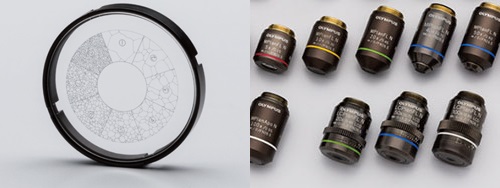
The STM7 series uses the same UIS2 infinity-corrected optical system used in state-of-the-art optical microscopes. As a result, observed images have high resolution and high contrast, with aberration thoroughly eliminated to help ensure highly accurate measurement in minute detail.
Measurement Reliability Enhanced with a Stage-Mounting Plate Crafted from Stone
STM7-LF FEM analysis
To provide further assurance of measurement accuracy, the STM7 series uses a highly durable, vibration-resistant frame with a granite surface plate. As a result of this stability, measurements can be taken at sub-micron-levels while ensuring minimal error.
Continuing to Provide User-friendly, High-Precision, 3-axis Measurement as a Pioneer of Height Measurement
Reflective Active, Confocal Autofocus System Optical Path
As modern manufacturing technology becomes increasingly miniaturized and precise, highly accurate measurements are even more essential—not only along the horizontal XY axes, but also along the Z-axis. Olympus has responded to such needs by being the fi rst to realize an autofocus system for measuring microscopes by means of the reflective active, confocal method.
Dependable Quality Based On a Strict Traceability System
Measuring Microscopes Traceability System
The accuracy of Olympus’ measuring microscopes is controlled by a strict traceability system and Olympus even offers traceable calibration at the time of installation.
The STM7 was Designed with Emphasis on Ease of Use
Offering Stages to Fit the Sample Size at Hand
Common Problems
Short measurement stroke precludes the measurement of larger samples.
Sample rotation required to compensate for shorter Y than X-axis coverage during measurement is time inefficient. Until now, large stages have offered a sufficient measurement coverage on the X-axis, but only less coverage on the Y-axis.
Due to the narrow measurement range, it is impossible to line up large numbers of samples on the stage for measurement at once.
STM7 Solutions
Four types of stages are available, each with a unique square measurement stroke (choose from 50 mm x 50 mm, 100 mm x 100 mm, 200 mm x 200 mm, and 300 mm x 300 mm). From small to large size samples, there is a stage that fits the sample being measured.
A clutch system enables rapid switching between coarse and fine movements. Thanks to this switching function, the stage can also be moved rapidly along the X- and Y-axes, and freely across the XY plane.
The 300 mm square length stage enables the same measurement stroke to apply to both the X and Y-axes, which means it can be used to measure large samples, such as 300 mm wafers and printed circuit boards without changing their orientation.
Use the Same Microscope for Both Low- and High-Magnification Observations
Common Problems
Most conventional measuring microscopes only accept a measuring objective or metallurgical objective, and so are unable to meet the requirements for a wide variety of observations.
STM7 Solutions
The STM7 accepts both a metallurgical objective and a measuring objective by exchanging a revolving nosepiece with a measuring objective adapter. This means that the STM7 combines both metallurgical optics and measuring optics in one microscope. In this way, the STM7 series satisfi es a range of needs, no matter whether measuring a wide area or tiny region, measuring the size of differences betwe en levels, or assisting the user in deciding on the best observation method to choose.
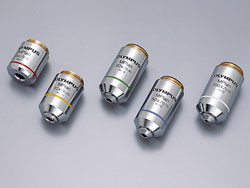
Measuring Objectives
Because the measuring objectives have an extremely long working distance, they provide confidence when focusing on samples with large peaks and troughs while reducing worries of the objective coming into contact with the sample. Furthermore, their low-magnifi cation capability enables wide areas to be observed in a single view.
Metallurgical Objectives
Metallurgical objectives enable high-magnifi cation, highresolution observation capability comparable to that of optical microscopes. What’s more, these objectives can be used not only for brightfield, but also for darkfield and DIC observation.
> Click here for details about UIS2 objective lenses
Manual and Motorized Focusing Model Options
The STM7 Line Includes both Manual and Motorized Focus Options
Focus control is available with either manual or motorized operation. Choose the model that addresses your needs in terms of samples and measurement content, regardless of stage size—with all frames incorporating a linear scale for the Z-axis that enables 3-axis measurement.
Manual Z-axis Focus Models
Manual Z-axis focus models offer excellent cost performance—with familiar handle operation for rapid vertical movement that offers convenience for users who needs to measure samples with variety of heights.
Motorized Z-axis Focus Models
Operability is improved and handling fatigue is reduced for focus and height measurements when using the motorized focus unit. The coaxial knobs for coarse and fine movement offer a feeling similar to manual operation, while the models can also be equipped with an autofocus unit.
A Revolutionary Control Unit Refines Measuring Microscope Usability
Common Problems
Additional functions require additional operational units. Operators can’t always locate the corresponding unit quickly, which significantly reduces measurement efficiency.
Numerous operational units and their power supplies around the main unit occupy valuable working space.
STM7 Solutions
Controllers
With the STM7 series, a single controller makes it possible to perform virtually all measuring microscope operations, including use of readout reset, illumination control, focusing, and autofocus. For efficiency and convenience, the unit can be placed wherever you wish and operated easily with one hand.
Control Box
The power supply and transmission for each unit are combined in a single control box. This preserves maximal work space even when a range of optional functions, such as the focus navigator, are added.
Automatic Light Intensity Adjustment Greatly Improves the Efficiency of Observation and Measurement
Common Problems
Analog volume adjustment used by conventional measuring microscopes does not enable the quantitative assessment of light intensity, which can lead to variability in measured values as light intensity changes.
With conventional measuring microscopes, light intensity may need to be adjusted every time the objective is switched—making for an inefficient workflow.
STM7 Solutions
Close Control through a Quantitative Digital Display of Light Intensity Values
The STM7 series provides a quantitative digital display of light intensity—enabling observations to always be made under consistent illumination conditions.
Light Intensity Manager Eliminates the Need for Manual Adjustment
Light intensity manager can be used with the coded revolving nosepiece configuration. The coded revolving nosepiece automatically detects the switching of objectives. This allows the illumination method and light intensity to be registered for each objective, and adjusted automatically during measurements when the objective is switched. Now there is no need to manually adjust light intensity, which used to be required with every switch between magnifications.
A Detachable Digital Read Out for Preferred Location Enables Swift, Convenient Checking of Measurement Results and Equipment Status
Common Problems
The need to check the operation status of equipment, such as illumination, or measured values on individual units makes overall operation cumbersome.
STM7 Solutions
Digital Indicator Enables the Current Operation Status to be Verified Visually
The indicator displays the device status and settings. The minimum X, Y, and Z-axis values can be switched between 0.1 μm and 1 μm, and the display units can be switched between mm, μm, inches and mil.
Detachable Digital Readout Allows for Individual Preference and Placement
Whether attached to the frame or a desk, the placement of the detachable digital readout is up to the individual user. While standing to take measurements, it can be placed on the side of the frame at almost the same height as the site of observation for an exceptional and easy view. When operating from a sitting position, such as observation or measurements on a monitor via a digital camera or when using the motorized Z-axis focusing model, simply place the digital readout and hand controller on the desk.
Automated Focusing System Provides Superior Repeatability
Achieve Faster, Simpler, More Accurate Height Measurement
Common Problems
When doing visual measurement, variations can arise in the height measurements between different operators. Furthermore, this measurement method is time-consuming and inefficient.
STM7 Solutions
Simple and Highly-Precise Focusing System with Superior Repeatability
The Olympus’ focus navigator delivers highly reproducible height measurement by projecting a pattern within the fi eld of view and identifying vertical deviations. Slight errors can occur in height measurements taken with normal visual observation, even when focus appears to be sharp. The focus navigator, however, enables measurements to be made simply by matching up the marks—thereby reducing operator subjectivity in measurement results.
Focus Navigator
Visual Height Measurement
Autofocus Advantage for Fast and Highly Accurate Height Measurement
Common Problems
During visual measurement, the results of height measurement can vary between different operators.
Manual height measurement requires the operator to repeatedly move the stage and adjust the focus with the handle, making measurement time-consuming and inefficient.
Focusing on minute objects, such as bonding wires, is difficult.
STM7 Solutions
Dedicated Autofocus Unit: Outstanding Reproducibility and Focusing Speed
The STM7 dedicated autofocus unit allows highly accurate height measurements to be made with minimal time, regardless of the level of operator experience. Use of the reflective active, confocal method provides a stable focal point independent of surface roughness or a slanting sample surface, while the small laser diameter enables the use of autofocus, even on minute objects, such as bonding wires.
One-shot Mode
Instantaneously takes autofocus from a roughly focused state to sharp focus located at the center of the field of view.
TRACK Mode
The featured TRACK Mode provides autofocus that tracks the peaks and troughs of the sample, even if the stage is moved, keeping the image continually in focus. This advancement greatly improves the efficiency of Z-axis measurements by enabling observations to be made without taking your hands off the X and Y handles.
Accessories that Widen the Range of Observation and Measurement
Coded Revolving Nosepiece
Combining a coded revolving nosepiece with a digital camera lets you display the objective magnification on-screen during observation and allows you to record that magnification. This convenient feature allows information on your sample and the objective’s magnification to be recorded at the same time when recording a sample.
MM6-EMO/ Erect Image Monocular Tube
Monocular tube for erect images. Can be used in combination with MM6-OCC10x (eyepiece with cross hairs).
STM7-FS/ Foot Switch
Enables hands-free transmission of data, allowing operators to complete measurement without taking hands off the X and Y handles.
SZ-LW61/ White LED Illumination Unit
This light-weight, space-saving design model provides a long operating life and low power consumption. The cost-effective LED illumination unit is also free from the flickering and brightness fluctuation.
SZX2-ILR66+SZX-RHS/ LED Ring Illuminator+Manual Control Unit
SZX-RHS manual control unit enables independent illumination of four-segments of the SZX2-ILR66 reflected LED ring illuminator, which provides clear images with high color temperature. The optimal illumination can be selected from 13 patterns.
Rotatable Stage
Enables easy parallel alignment of sample.
System for Achieving More Advanced Measurement
Measurement Support System
The ability to clearly and easily see the output display component of measuring microscopes is essential. That is why the new Olympus measuring software has been created, helping to deliver complex measurements with greater accuracy. The software also enables the use of digital cameras.